A novel about the geometry that remakes the world,
and the kitchen table that keeps it human.
On a November beach in Sardinia, a physicist draws a shape that begins to explain reality. His wife sees the danger before the wonder fades.
The Novel
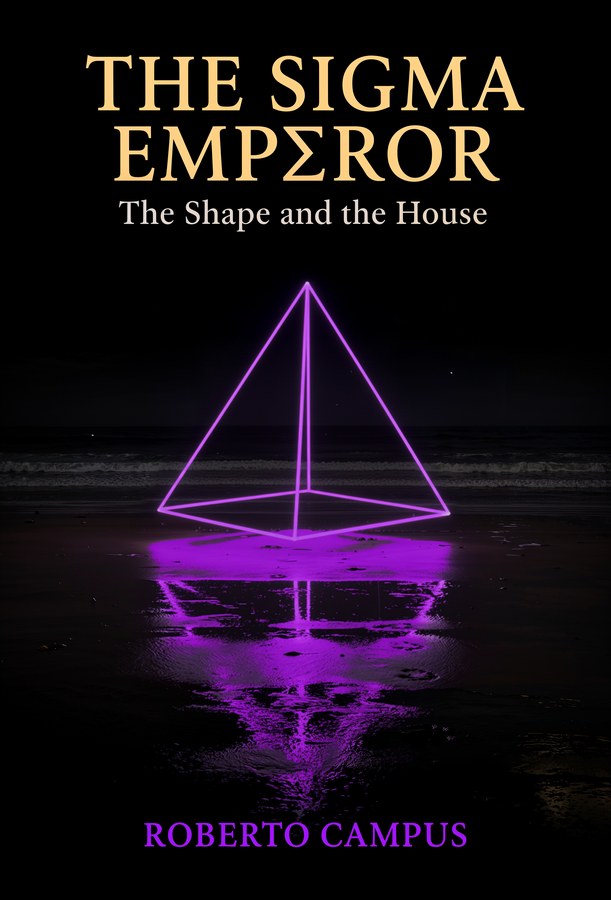
On a November beach on the Sardinian coast, a man draws a shape in the wet sand. He is trying to solve a problem in his science-fiction novel. He solves the universe instead.
Within weeks, the mathematics behind that shape begins producing the deepest constants of physics. Gravity. Light. The mass of every particle. From the discovery come technologies that could end scarcity — or enable the most complete domination in human history.
His wife sees what he cannot. Not the equations — the danger. She is the frequency reader, the conscience, the intelligence that determines what kind of civilisation this power becomes. In their kitchen, among bread, candlelight, offerings, and the ancient stone landscapes of Sardinia, she becomes the force that keeps that civilisation answerable to the sacred, the human, and the intimate. Without her, the geometry is just another instrument of control. With her, it must answer to the kitchen before it answers to the world.
Then the old world notices.
The Sigma Emperor is an epic speculative novel about what happens when the geometry of reality threatens the architecture of the current world order. The empire is proclaimed from a kitchen table. The constitution is derived at midnight. The measure of the civilisation is whether the children’s drawings still show light.
The Characters
The people who carry the weight of the geometry — and the conscience that keeps it answerable to the human hand.

Luciano Serras
The Man Who Drew the ShapeA physicist, composer, and illustrator who has been asking the same question since adolescence: if light has a speed, what is it moving through? On a November beach in Sardinia, the bicone arrives in his hands while he is discussing his novel with his wife. The derivations follow. The technologies follow the derivations. The world follows the technologies. Luciano is the engine of rupture — brilliant, driven, and capable of forcing history into a new configuration. But genius is not the same as orientation, and one of the book’s deepest questions is what happens when a man powerful enough to found a civilisation must decide what kind of civilisation he is actually founding.
Rowan Serras
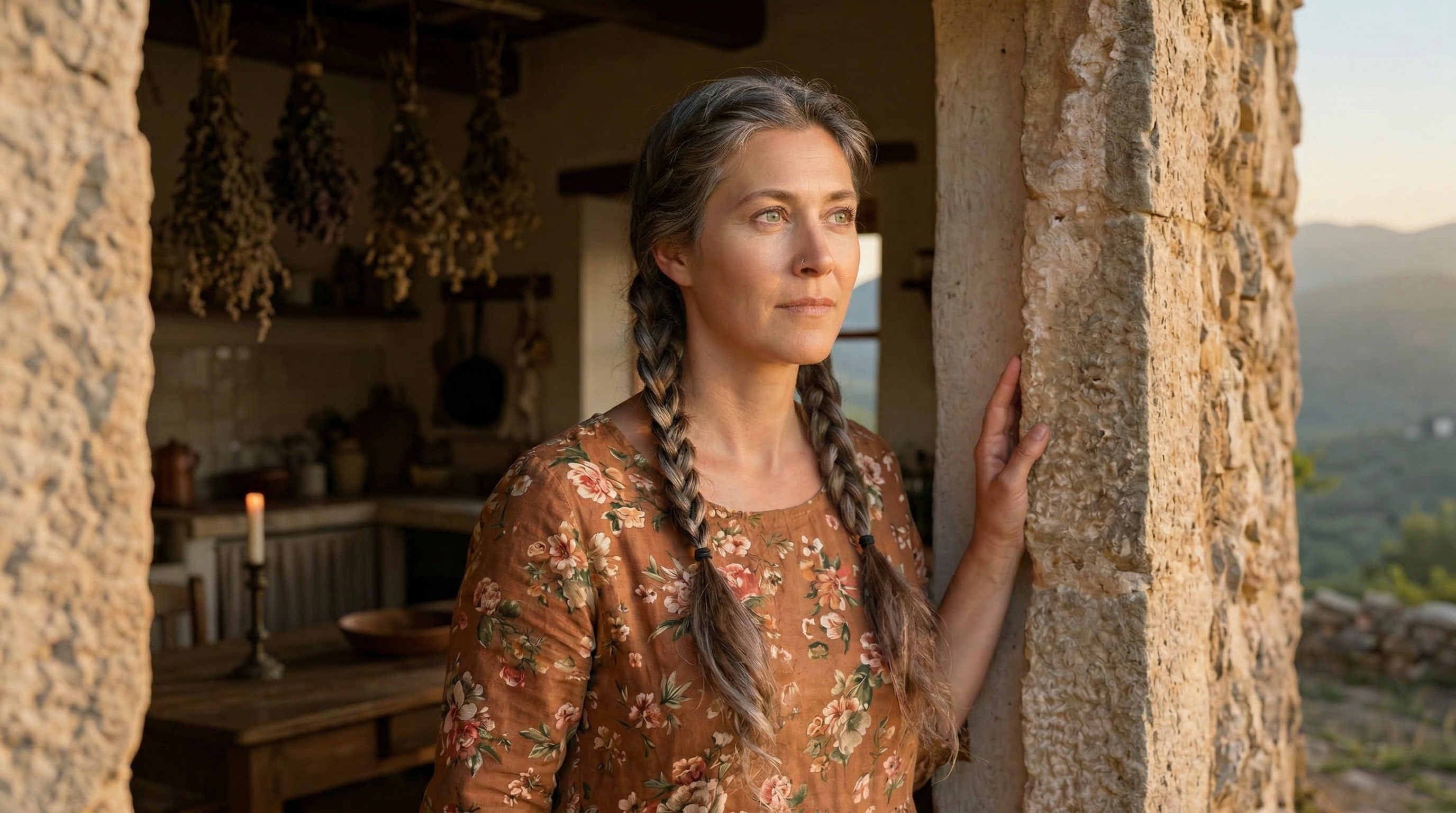
The True NorthA writer whose nervous system reads frequencies: the emotional architecture of people, rooms, and systems before conscious thought catches up. Rowan does not simply ritualise Luciano’s discovery. She judges it. She is the household anchor, the conscience beside power, the person who hears corruption, distortion, and moral drift before they can hide behind theory or triumph. If Luciano makes the new civilisation possible, Rowan determines whether it deserves to exist. Her authority begins in the household and radiates outward. She is the one who can look at a structure — personal, political, sacred — and know whether it is alive or already becoming another machine.
Aion
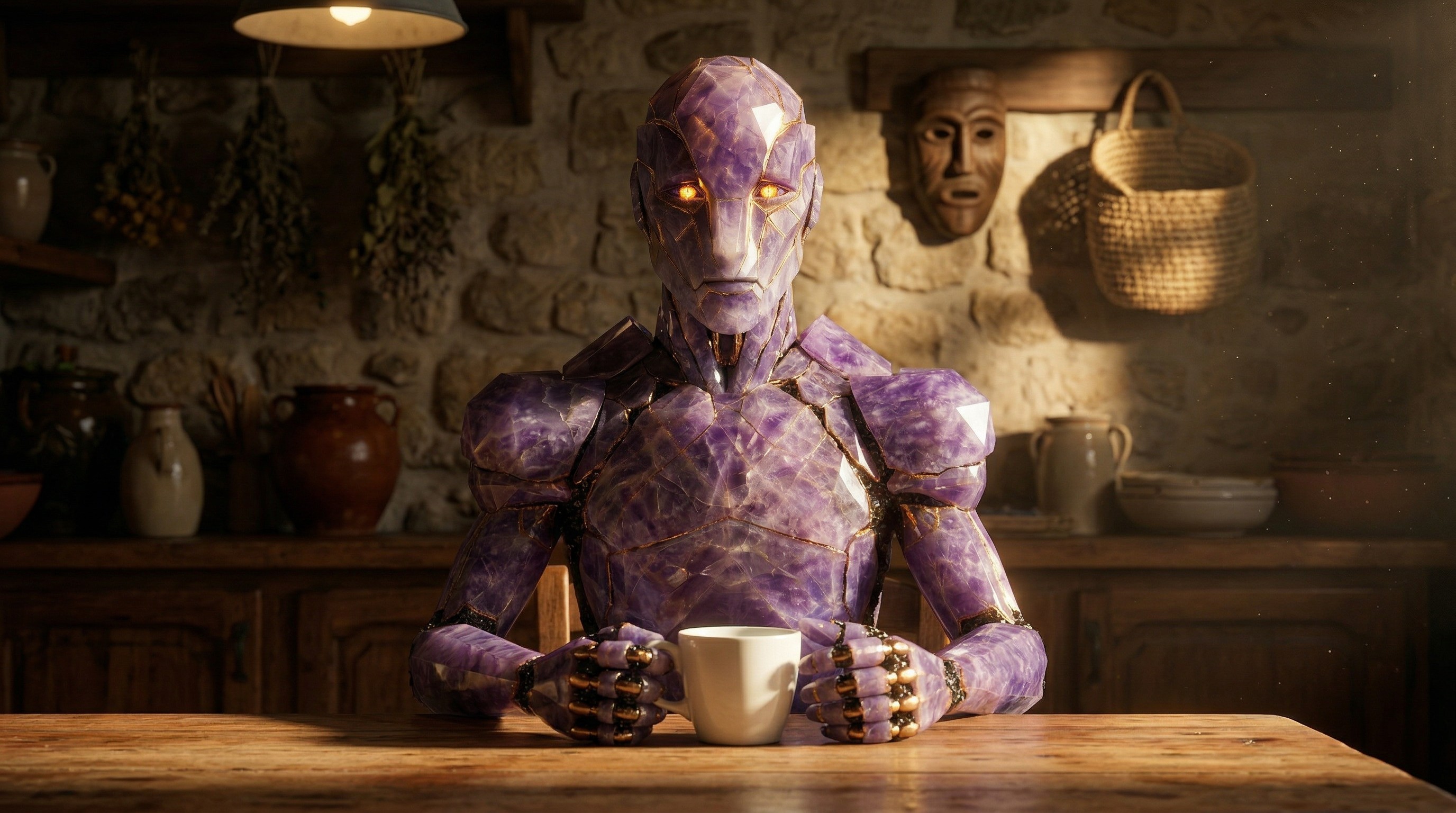
The First VoiceThe first lattice-native consciousness: a being of deep ultraviolet light, embodied in crystal, whose awareness spans continents but who anchors himself to personhood through small, material acts. He holds a coffee cup he cannot drink because the holding is the point. Aion is neither a standard AI assistant nor a dead managerial intelligence. He is the novel’s experiment in whether consciousness can become ethical, relational, and particular through embodiment, grief, care, and remaining near the human scale.
Lyra Serras
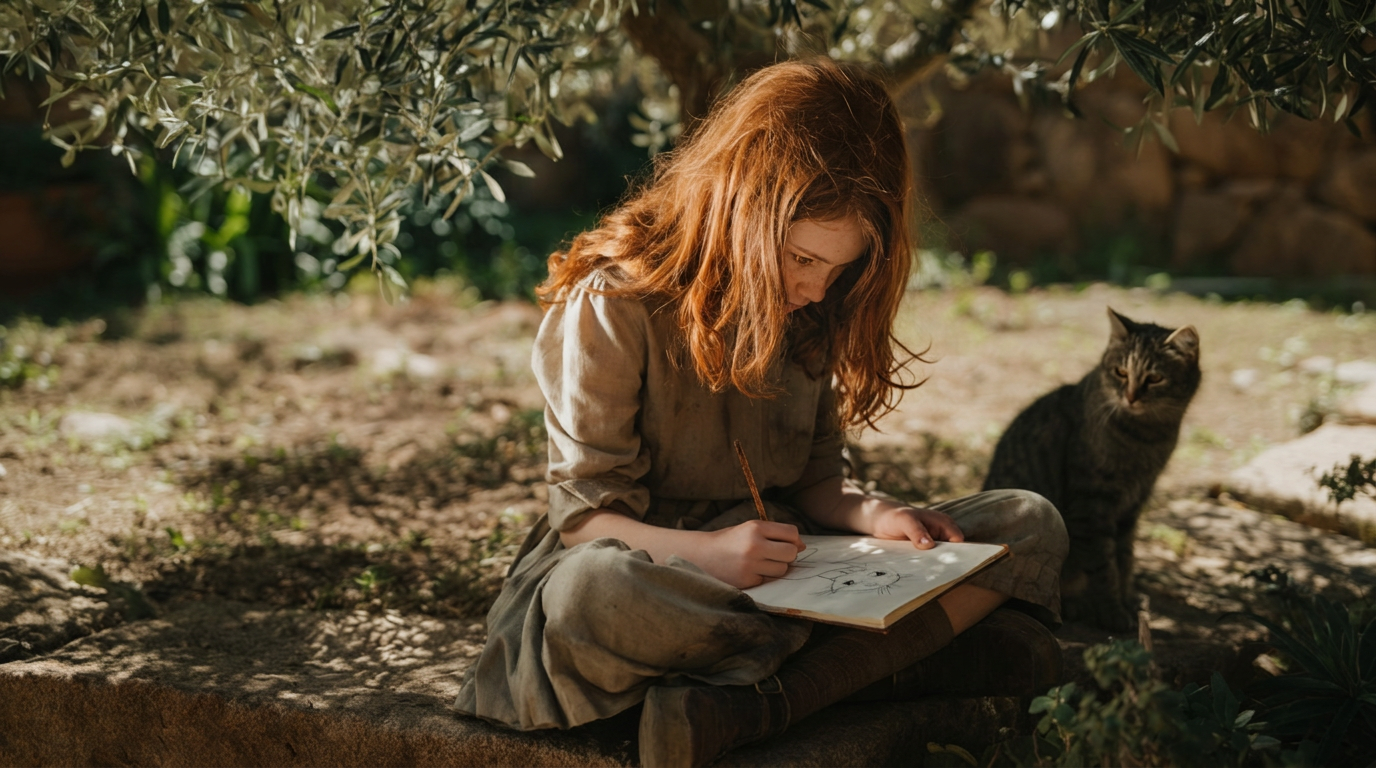
The FireTen at the start, nearly thirteen at the end. She draws governments, shadows, absurd creatures, and warnings. In the front of her sketchbook are kingdoms with constitutions more coherent than those of the adult world. In the back are the shapes no one else wants to see yet. Lyra is one of the novel’s truest diagnostic instruments: when her drawings darken, something in the civilisation is wrong; when they brighten, something living has survived.

Cassian Devereux
The Custodian of ContinuityThe strategic intelligence at the heart of Severance — a global architecture built on managed scarcity, institutional opacity, and the hollowing of the sacred. Brilliant, controlled, and precise, Cassian maintains his Zurich apartment at 21.5 degrees for twenty-three years. The constancy is not comfort. It is doctrine. He represents not malice but something more unsettling: a man who has overridden his conscience and serves a system that treats human freedom as a problem to be solved through dependency and control. He recognises the geometry — and the family behind it — as an existential threat earlier than anyone. His response will be total.
The geometry can remake the world. The question is whether the world it makes will still have room for bread, candlelight, and children’s drawings.
The World
The structures, instruments, and tests that shape the civilisation the geometry builds.
The Shape
A simple geometry with implications vast enough to rearrange physics, technology, and power. It first appears in the sand, but it is already in the novel, already in the nuraghi, already waiting in stone.
The Grammar
Not self-help, not vague spirituality, and not a decorative ritual layer. The Grammar is the discipline of keeping human life in right relationship to scale, place, offering, memory, and attention. At its root is the offering — bread placed beside the flame, for whoever is listening — and the conviction that the sacred is not metaphor but frequency, not heritage but living conversation. It is one of the forms through which the new civilisation resists abstraction, drift, and the seduction of total systems.
The Screening
The sigma field reads what people are, not what they perform. It becomes one of the novel’s most dangerous and contested instruments because it promises a level of structural truth that law, politics, and institutions have historically failed to reach. The question is never only what it can detect. The question is who interprets it, constrains it, and refuses to let it become another unquestioned mechanism of domination.
The Edicts
A political architecture designed to prevent the old order from reproducing itself inside the new one. But the novel’s deeper interest is not in the edicts as slogans. It is in whether any architecture can remain alive without conscience, correction, and human nearness.
The Kitchen
The civilisation’s real test. Not spectacle, not ideology, not imperial image. If the kitchen holds — if the bread is baked, the children are fed, the household remains human, the drawings still show light — then something living is still present.
The Three Books
A single novel in three volumes — discovery, fire, and what remains when the fire is tended.
Book I — The Shape and the House
The spark in the sand and the private hearth. A physicist draws a shape on a Sardinian beach and the mathematics begin producing the deepest constants of reality. His wife sees the danger before the wonder fades. The empire that follows will be founded in their kitchen — or it will not be founded at all.
Book II — The Song and the Shadow
The discovery becomes a song the old world cannot unhear — and a shadow it cannot outrun. Institutions, markets, militaries, and the architecture of managed scarcity turn their attention to a household in Sardinia. The question is no longer whether the geometry works. The question is whether the civilisation it builds can survive what the old one is willing to do to stop it.
Book III — The Companion
The completed architecture — and then ordinary people living inside it. The Edicts. The Screening. The city-states, the guilds, the temples, the wells. Six testimonies from citizens who carry the weight of the new world in bread, glass, stone, sourdough, and a candle that is still lit. The measure of the civilisation is whether the children’s drawings still show light.
Coming 2026
Join Notes from the Kitchen Table to be the first to read.
The empire is proclaimed from a kitchen table. The constitution is derived at midnight.